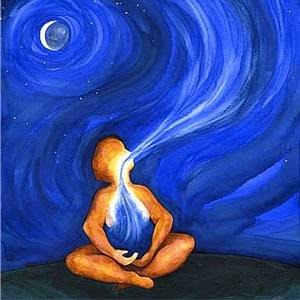
We breathe around twenty thousand times a day, yet most of the time our breath is short and high, using only the top of the chest. The full yogic breath is the first pranayama we teach at Omshanti, because it gives the breath back its natural range.
The three areas
Picture your lungs as a bottle filling from the bottom up:
- Belly: as you inhale, the diaphragm moves down and the belly gently expands.
- Ribs: the ribs open out to the sides, like an accordion.
- Chest: finally, the upper chest and collarbones lift slightly.
As you exhale, the air leaves in reverse order or all at once, unhurried, letting the body empty completely.
How to practise
Sit with a straight back or lie on your back. Place one hand on your belly and the other on your chest. Inhale through the nose for four or five seconds, feeling the three areas fill, then exhale through the nose for the same count or a little longer. Take five to ten breaths and return to your natural breathing.
Why it’s worth it
The full breath calms the nervous system, improves lung ventilation and brings you into the present moment. Practise it for a few minutes a day and you’ll soon notice you breathe better even when you’re not thinking about it.
Tip: never force it. If you feel dizzy, go back to normal breathing. The breath should be spacious, but always kind.