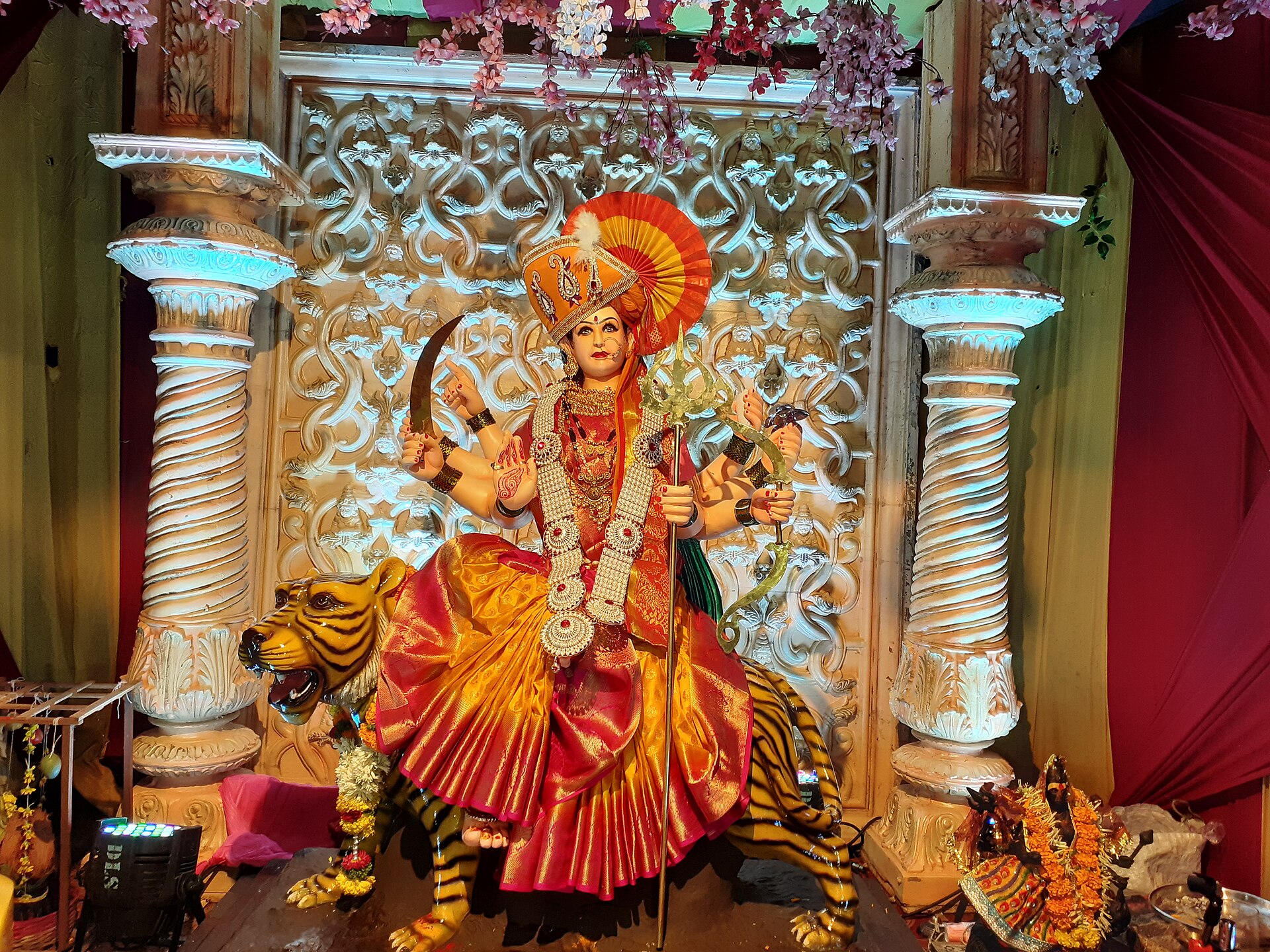
Navaratri is one of the great Hindu festivals and one of the most deeply felt in India. The name says it all: nav means nine and ratri means night. These are nine vibrant, devotional nights in which millions of people honour the different incarnations of the goddess Durga. More than a festival, it is a profound spiritual journey and a dazzling cultural spectacle.
A window into India’s soul
Navaratri reaches beyond religious boundaries and reveals the country’s rich traditions and living spirituality. Over these nights the nine forms of the goddess are worshipped, each representing a facet of divine feminine energy that embraces every part of life: from strength and courage to beauty and wisdom.
Across the country the festival fills with rituals, music, dance and colourful decoration, and every region adds its own flavour:
- Gujarat: the electric energy of garba, circle dances where people whirl in brightly coloured clothes.
- West Bengal: the grandeur of Durga Puja, with spectacular displays and powerful rituals.
- North India: the Ramlilas, theatrical performances of Lord Rama’s victory over the demon king Ravana.
- South India: a more serene experience with Kolu, arrangements of dolls and figurines that tell divine stories.
This variety reflects India’s great cultural diversity.
Myth and tradition
Navaratri’s roots run deep. It commemorates the epic battle between Durga and the demon Mahishasura, symbolising the triumph of good over evil. The nine days honour Durga and her nine avatars, the Navadurga:
- Maa Shailaputri
- Maa Brahmacharini
- Maa Chandraghanta
- Maa Kushmanda
- Maa Skandamata
- Maa Katyayani
- Maa Kaalaratri
- Maa Mahagauri
- Maa Siddhidatri
Deep rest
Navaratri is also a path of introspection, prayer and renewal of faith. Just as night lets us rest and wake refreshed, these nine nights offer a chance for deep rest. Fasting, meditation, prayer and other spiritual practices help release everyday worries and encourage relaxation and creativity.
Experiencing it up close
Navaratri isn’t only culture and spirituality: it’s also a culinary adventure. There are regional specialities, from Gujarati snacks to Bengali sweets, and dishes made especially for these days. Talking with locals about the meaning of the festival and its rituals, or attending a Navaratri puja, lets you truly feel the devotion in the air.
Where and when
It is celebrated across India, with major events in Ahmedabad, Porbandar, Bhavnagar, Jamnagar and other Gujarat cities, in Thane and Nagpur (Maharashtra), all over Kolkata, at Delhi’s Ramlila Ground and in Katra (Jammu). It takes place in autumn; in 2026, from 11 to 19 October. Entry is free.
On the mat
During these days you could dedicate each practice to one quality of the goddess: strength, courage, beauty, wisdom. Nine nights, nine intentions.
Source: Incredible India – Navratri.
Image: आर्या जोशी, Wikimedia Commons, CC BY-SA 4.0.