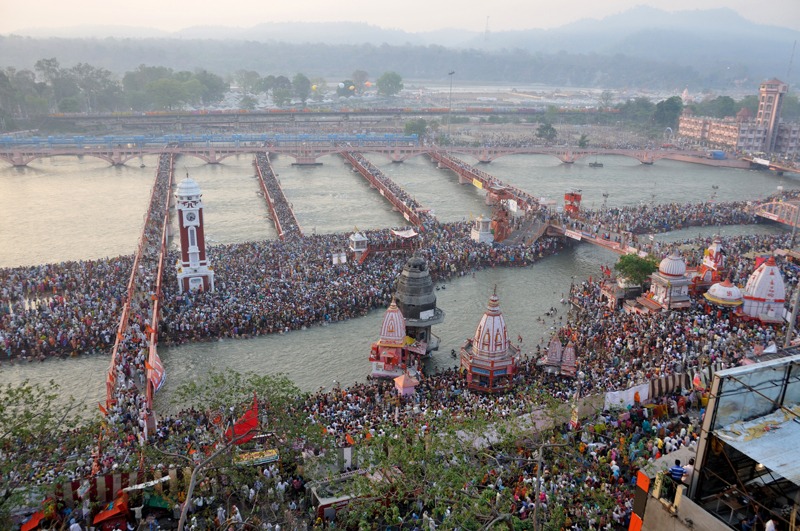
UNESCO describes the Kumbh Mela as the largest peaceful congregation of pilgrims on earth. Participants bathe in a holy river, believing it cleanses them and frees them from the cycle of rebirth.
Where and when
It rotates between four cities: Prayagraj (Allahabad), Haridwar, Ujjain and Nashik. According to UNESCO, it is held every four years, moving between these sites.
Who comes
Ascetics, saints, sadhus, kalpavasis (pilgrims who stay for a month of practice) and visitors from around the world.
More than a bath
The festival brings together astronomy, astrology, spiritual practice and social and cultural customs.
Knowledge passed on
Knowledge is passed down through texts, oral accounts and travellers’ writings, but above all from teacher to disciple in the ashrams and akharas of the sadhus. In 2017 it was inscribed on the Representative List of the Intangible Cultural Heritage of Humanity.
Source: UNESCO – Kumbh Mela.
Image: Coupdoeil / Philipp Eyer, Wikimedia Commons, CC BY-SA 3.0.