Imagine a land bursting with colour, where laughter spills into the streets and joyful chaos fills the air. This is Holi, the festival of colours and of spring. A celebration that knows no boundaries of religion or age, inviting everyone to drop their inhibitions and celebrate togetherness.
Welcoming spring
As winter ends, India’s landscape comes alive with colour to welcome spring. Holi falls on the last full moon of the Hindu lunisolar month, usually in March. In the streets, people of all ages playfully throw coloured water and powder at each other.
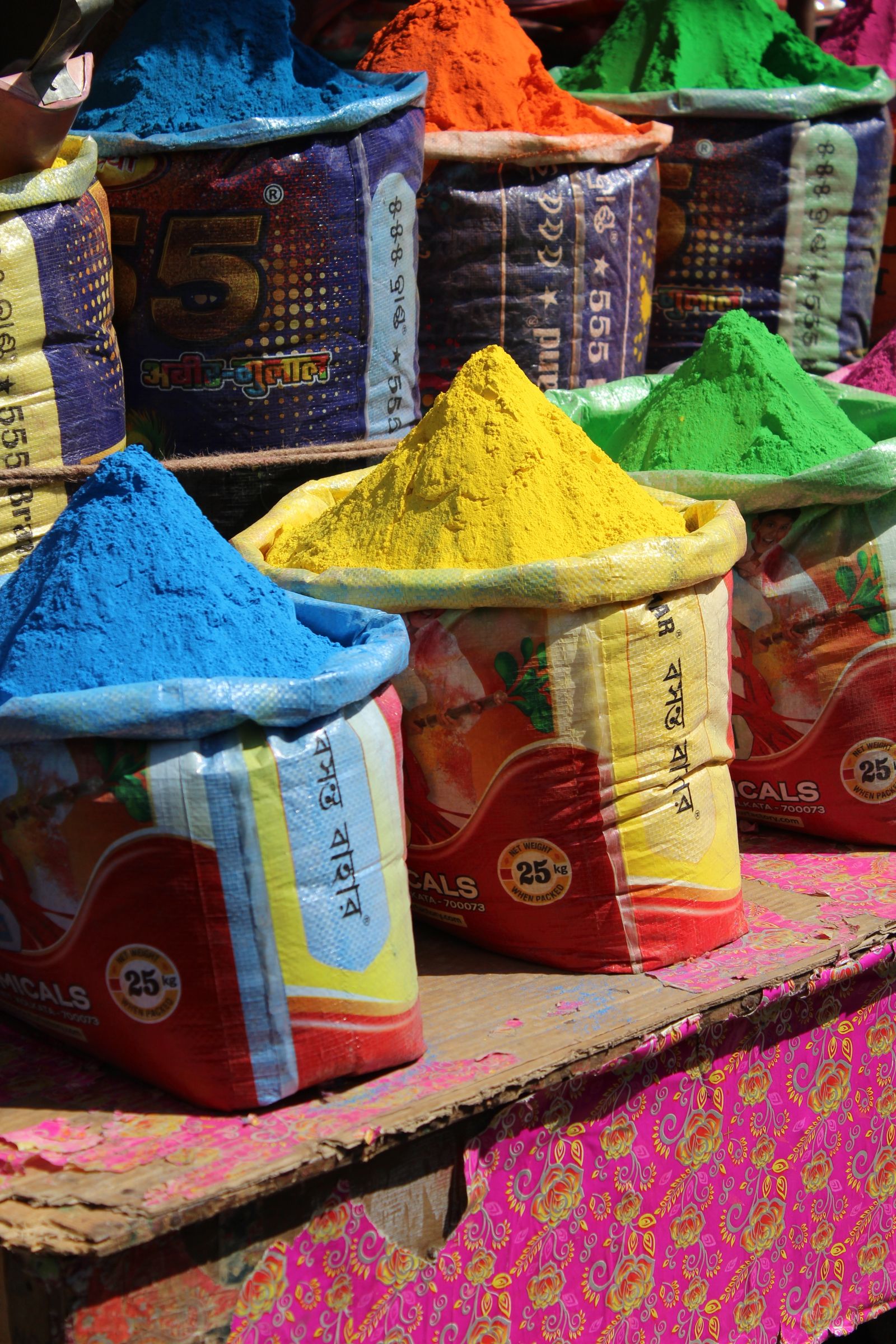
Each colour has meaning: green for rebirth, red for marriage and fertility, yellow for purity and victory, and blue for Krishna. Holi is often linked with the divine love of Radha and Krishna, which is why it’s also called the festival of love. The festive cry: “Holi Hai!”
Holika Dahan, the bonfire
On the eve of Holi a symbolic bonfire, Holika Dahan, is lit. Families gather around it, share stories and pray for a prosperous year.
It isn’t just any fire: it symbolises the triumph over evil. It comes from the legend of demon king Hiranyakashipu, who wanted to end the life of his blessed son Prahlad with the help of his sister Holika. Instead, Holika burned in the fire meant for Prahlad, who walked out unharmed. Ever since, the ritual stands for burning away negativity, and the day celebrates good over evil.
Another legend tells of the playful love of Radha and Krishna. Blue-skinned Krishna is said to have teased Radha by smearing colours on her face. Holi’s colours echo this tradition: an invitation to embrace joy and love in all their messy beauty.
The festive atmosphere
Around the fire, people toss in wood, dry leaves, twigs and even grains for roasting, letting go of past mistakes and conflicts. The next day comes Dhulandi, the day of colour and water.
Don’t be surprised to be showered with coloured powder (gulaal) or squirted with coloured water guns (pichkaris). It’s a colour battle where friends and family become partners in crime. The air fills with laughter, shouts and the beat of the dhol, the traditional drum that pulls everyone into the dance.
The meaning of Holi
Beyond the colours, Holi marks new beginnings and relationships, where forgiveness is the weapon and joy the victory. Visiting neighbours and friends, you exchange not only colours but smiles and friendship. It’s a day to leave grievances behind and forge new bonds: a joyful exchange that erases social barriers and builds community.
A feast for the senses
The aroma of freshly made treats fills the air: gujiya (fried filled dumplings), thandai (a cooling drink with nuts and spices), malpua (pancakes in syrup), ghevar (a disc-shaped sweet) and dahi vada (lentil fritters in yogurt).
Where and when
Celebrated all over India on the last full moon of the Hindu lunar month, usually in March; in 2026, on 4 March.
On the mat
Holi reminds us that joy is a practice too. Try a class with music, free movement and a smile: let go of what feels heavy and open to the new.
Source: Incredible India – Holi.