As the autumn sun sets, India is transformed: millions of lights, colours and celebrations illuminate the country and people’s hearts. Diwali, or Deepavali, the festival of lights, is one of the most splendid festivals of Indian culture.
It celebrates the triumph of light over darkness and good over evil, and commemorates Rama’s return after fourteen years of exile and his victory over the demon king Ravana. For five days the streets fill with lights and decorations, and the air fills with joy. It is a festival that goes beyond religion, conveying unity, joy and spiritual awakening.
Five days of splendour
Diwali proclaims the victory of light over darkness, good over evil and knowledge over ignorance. Each day has its rituals:
- Day one: families clean their homes thoroughly, a fresh start. It is Dhanteras, when auspicious purchases bring prosperity for the year ahead. Markets buzz and homes are decorated.
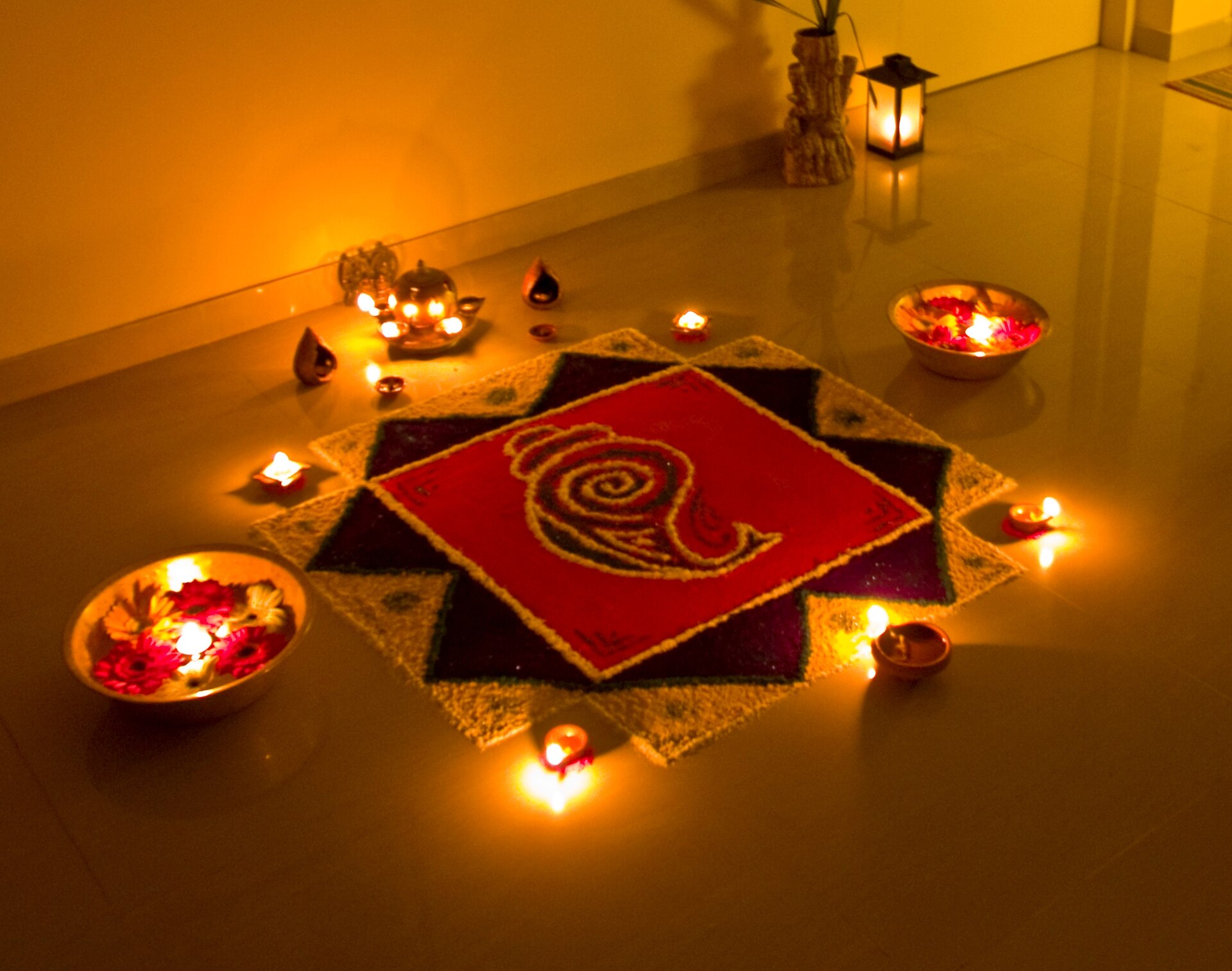
- Day two: homes glow with countless diyas, clay lamps, and intricate rangoli designs appear at doorsteps, colourful works of art welcoming good fortune.
- Day three: Lakshmi puja. Families gather to thank the goddess Lakshmi and ask for wealth and success in the coming year.
- Day four: a day for strengthening bonds and celebrating new beginnings, with gifts and sweets between loved ones, laughter, music and greetings.
- Day five: Bhai Dooj, dedicated to the bond between brothers and sisters, who renew their love and commitment.
Lights, markets and fireworks
During Diwali, thousands of oil lamps decorate homes, streets and temples with a golden glow. Markets shimmer with fabrics and handicrafts, and at night the sky fills with fireworks. Communities come together in shared wonder.
Feasts and gatherings
Diwali is also about food: traditional sweets (mithai) such as gulab jamun and jalebis, and savoury dishes like samosas and biryani. Sharing a Diwali meal with a local family is the best way to experience Indian hospitality.
But it is also a time of reflection and renewal: families exchange gifts and prayers, and temples decked with marigold garlands fill with hymns and chants.
The deities
The presence of Lakshmi, embodiment of prosperity, grace and fortune, is strongly felt. Ganesha, the elephant-headed god of wisdom and remover of obstacles, also blesses the festivities.
A festival for all
Though rooted in Hindu tradition, Diwali crosses religious boundaries. Jains mark Mahavira’s nirvana; Sikhs honour Guru Hargobind’s release as Bandi Chhor Divas; and many Buddhists embrace its spirit too. Its message of hope, unity and goodness is universal.
Echoes through history
In the 11th century, the Persian historian Al-Biruni described Hindus celebrating Diwali on the new-moon day of Kartika, with oil lamps on temples and rooftops. In the 15th century, the Venetian merchant Niccolò de’ Conti wrote with admiration of temples full of lamps and families in new clothes singing, dancing and feasting. Today over a billion people of many cultures celebrate it worldwide.
Diwali across India
- West: Diwali celebrates Vishnu sending the demon king Bali to rule the netherworld.
- Ayodhya: a million diyas turn the city into a spectacle of light.
- Varanasi: grand celebrations and, about fifteen days later, Dev Deepawali, the “Diwali of the gods”, with hundreds of thousands of lamps on the ghats.
- Amritsar: the release of Guru Hargobind, the sixth Sikh guru, is marked with kirtans resounding through the city.
- Jaipur: dazzling markets, Rajasthani food, majestic forts and folk music.
- South: the traditions of Naraka Chaturdasi, honouring Krishna’s victory over the demon Narakasura.
Where and when
It is celebrated all over India; some special places are Ayodhya, Varanasi’s Dashashwamedh Ghat, Mysore Palace, Lake Pichola in Udaipur, Jaipur’s Johri Bazar, the Meenakshi Temple in Madurai and the Diwali Bazaar at Delhi’s Dilli Haat. It falls on the new moon of Kartika, in autumn; in 2026, on 8 November.
An idea for home
Light a candle in the evening and dedicate it to something you want to leave behind. Even a small light changes the room.
Source: Incredible India – Diwali.
Image: Subharnab Majumdar, Wikimedia Commons, CC BY 2.0.