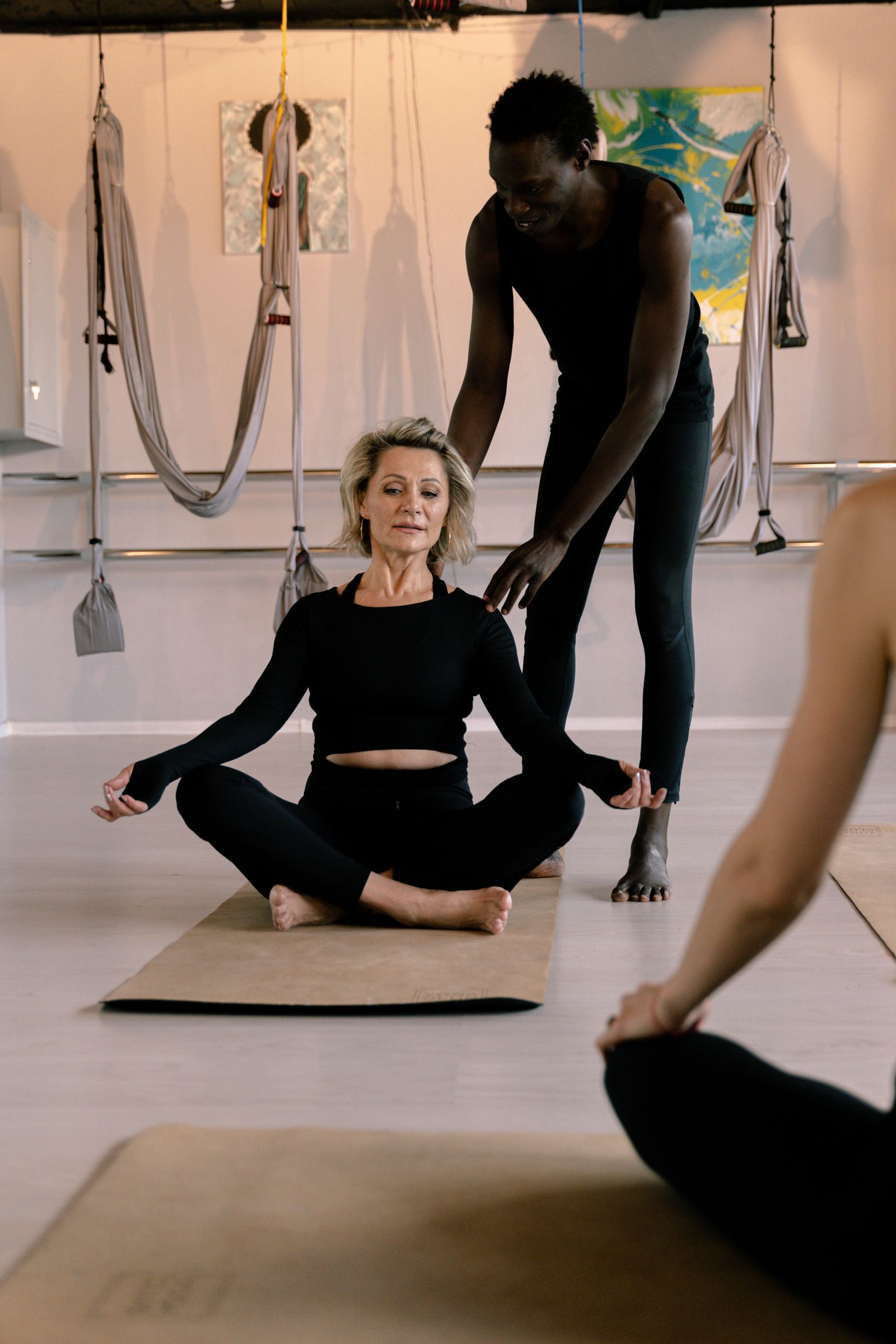
In class, the teacher’s voice is the thread that guides the group. That’s why we work on how we use it as much as on the content of practice.
Tone, pace and volume
- Tone: warm and natural, not put on. More energetic in dynamic parts; softer and lower in relaxation.
- Pace: unhurried, leaving time for instructions to reach the body.
- Volume: clearly heard at the back of the room without shouting.
Instructions and silence
You don’t need to fill every second. Silence lets students listen to their bodies. A good rule: give a clear instruction, leave a few moments of silence, then guide again.
Concise or detailed language
In transitions and dynamic sections, few words. In held poses, we can add technical detail and sensations.
Inclusive language
We avoid phrases that make students feel less capable, like “if you can’t…”. Better to offer options: “you can stay here or, if you like, go a little further.” Every body has a place in class.
Recording yourself teaching and listening back is one of the best exercises for any teacher.