The word Upanishad means, roughly, “sitting near”: sitting at the feet of a teacher to hear a deep teaching. The Upanishads are a collection of ancient Indian texts that ask the biggest questions: Who am I? What is real? What remains when everything changes? Many of the ideas we now link with yoga and meditation come from them.
What they are
More than two hundred texts carry the name Upanishad, but tradition singles out about ten or twelve as the principal ones. The oldest, such as the Brihadaranyaka and the Chandogya, were composed roughly between 700 and 500 BCE. They are the final part of the Vedas, which is why they are also called Vedanta, “the end of the Vedas”.
They are not books of rules or rituals. They are conversations between teachers and students, parents and children, kings and sages. Their tone is curious, sometimes poetic, sometimes very direct.
Atman and Brahman
The great idea of the Upanishads is that each person’s deepest essence, the Atman, is the same as the reality of the whole universe, Brahman. The Chandogya Upanishad sums it up in a famous phrase, tat tvam asi: “you are that”.
Put another way: beneath thoughts, emotions and the body, there is an unchanging awareness that connects us with everything.
Where yoga appears
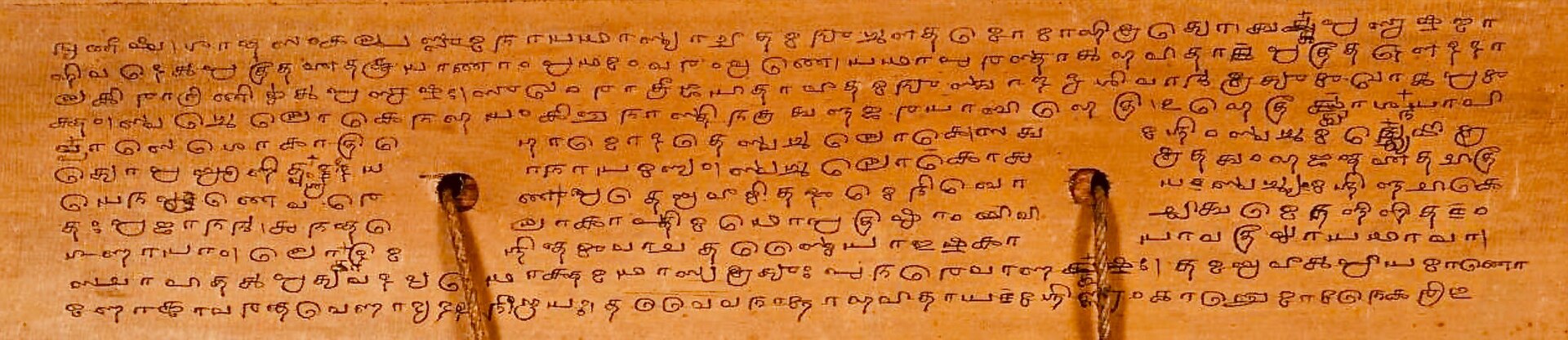
The Upanishads are among the first texts where yoga appears as an inner practice. The Katha Upanishad tells the story of the young Nachiketa, who goes to speak with Yama, the god of death, and asks what happens after we die. This is the text with the image of the body as a chariot and the senses as horses, and where yoga is described as the steady control of the senses.
Other Upanishads speak of the breath, the sound Om and states of consciousness. The Mandukya Upanishad, for example, describes four states: waking, dreaming, deep sleep and the fourth, pure awareness.
Arrival in the West
In 1657 the Mughal prince Dara Shikoh had them translated into Persian, and from that version they were translated into Latin in the early 19th century. Philosophers such as Schopenhauer deeply admired them. Today they inspire both yoga philosophy and many contemporary thinkers.
On the mat
Try a practice from the Upanishads: sit in silence and chant Om three times, slowly. Then stay silent for a minute and notice who is listening. No need to answer. Just observe.
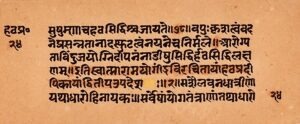
Image: Katha Upanishad manuscript in Grantha script, by Ms Sarah Welch, CC BY-SA 4.0.
Source: Wikipedia.