Few stories have shaped India as much as the Ramayana. It is sung, staged, danced, painted and celebrated every year at Diwali. It is a story of love, loyalty and the struggle between good and evil, but it is also a mirror for the inner life.
What it is
The Ramayana is attributed to the sage Valmiki and has around 24,000 verses in seven books. It took shape over centuries, more than two thousand years ago. There are many versions: one of the best loved is the Ramcharitmanas by Tulsidas, written in Hindi in the 16th century.
The story
Rama is the crown prince of Ayodhya. Just before his coronation, a palace intrigue forces his father to send him into exile for fourteen years. Rama accepts without complaint, and his wife Sita and his brother Lakshmana go with him.
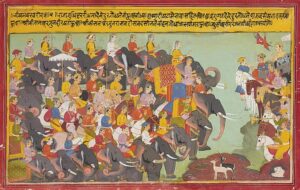
In the forest, the demon king Ravana kidnaps Sita and takes her to his island, Lanka. Rama and Lakshmana search for her and find help from an army of monkeys and bears. The bravest of all is Hanuman, who makes a huge leap across the sea to find Sita. In the end, after a great battle, Rama defeats Ravana and returns to Ayodhya. People light lamps to welcome him home: this is the origin of Diwali.
The characters as a path
Each character stands for a quality. Rama is dharma, doing what is right even when it’s hard. Sita is strength and faithfulness. Lakshmana is loyalty. Ravana, wise but full of pride and desire, shows how the ego can make us lose everything.
And Hanuman is pure devotion: the strength that comes from loving truly. That’s why yogis love him so much.
The Ramayana in class
You may not know it, but you practise the Ramayana in class. Hanumanasana, the front splits, recalls Hanuman’s great leap to Lanka. Many mantras and kirtans, such as Sita Ram and Hare Rama, come from this story.
On the mat
Before you try Hanumanasana, remember that Hanuman didn’t leap to prove anything: he leapt out of love. Warm up well, put blocks under your hands and go down only as far as feels comfortable. Devotion is patience too.
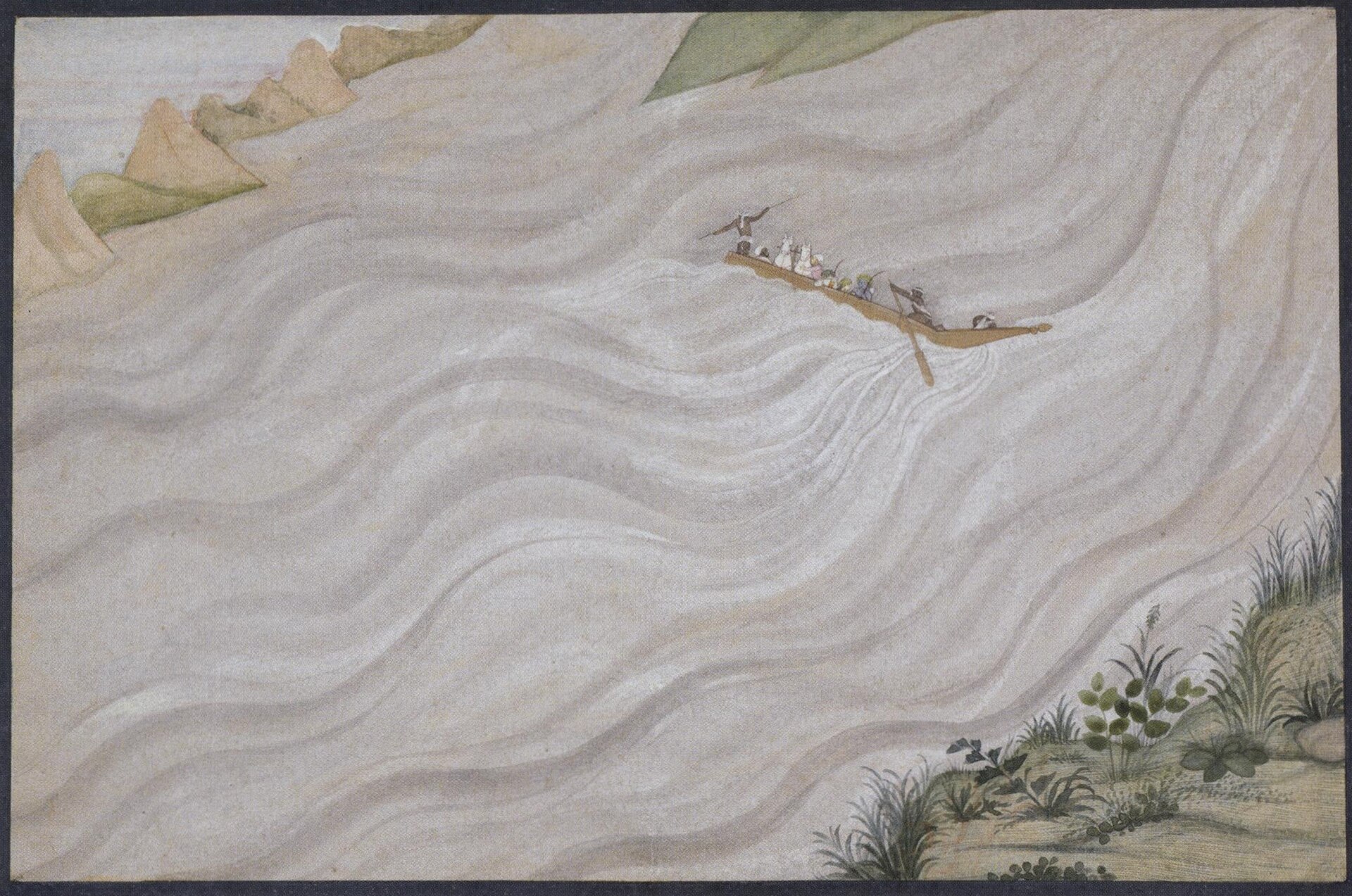
Image: Rama, Sita and Lakshmana cross the Ganges, folio from an 18th-century Ramayana, Wikimedia Commons, Public domain.
Source: Wikipedia.