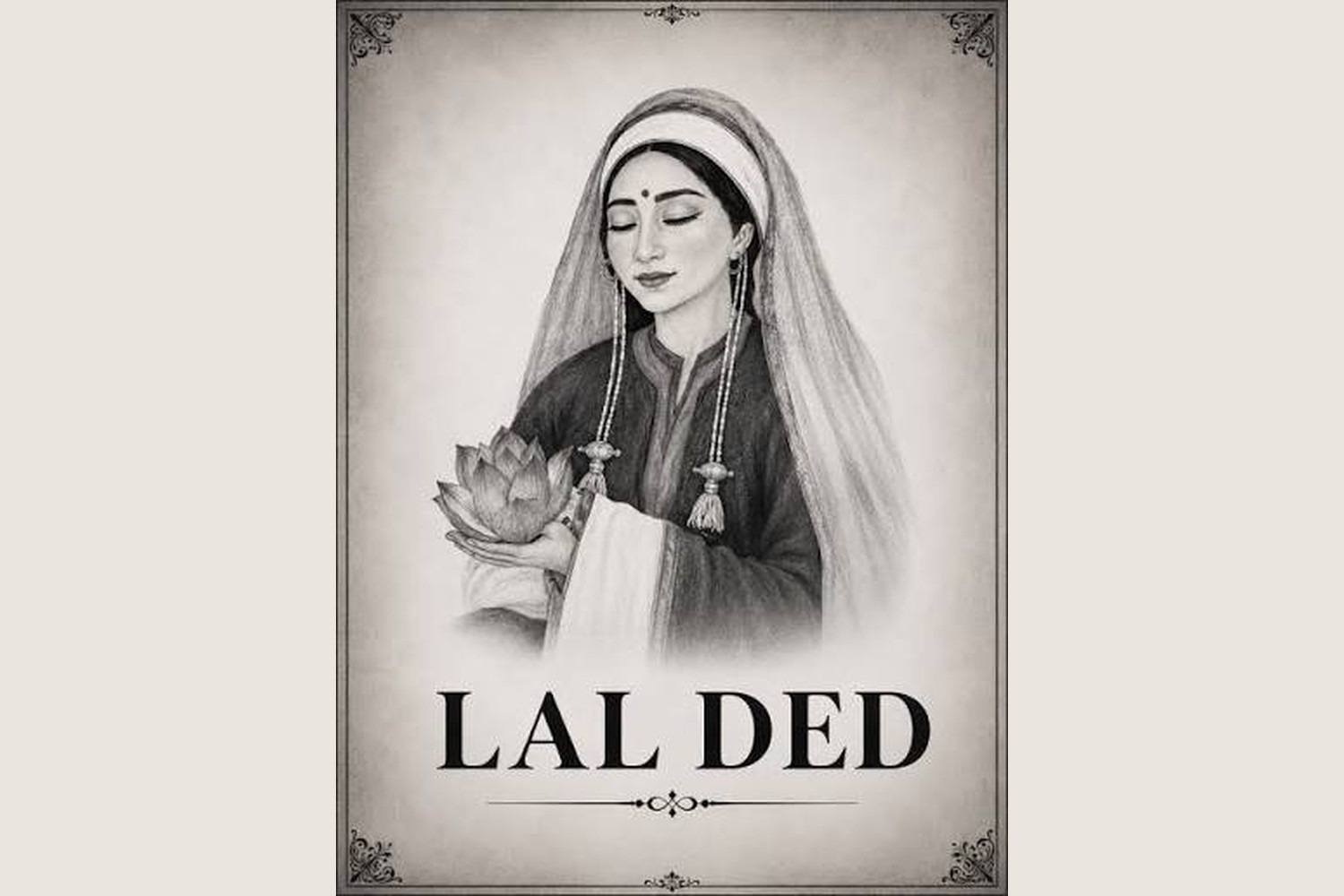
In Kashmir, almost everyone knows a verse by Lal Ded. Hindus and Muslims remember her in the same way: as a spiritual mother. She lived in the 14th century, left a difficult family life to follow the path of yoga, and expressed it in short poems still passed down from generation to generation.
Married at twelve
She was born around 1320, near Pandrethan or Sempore, close to today’s Srinagar. As was the custom, she was married very young, at about twelve, and given the name Padmavati. But she remained Lalla.
Tradition says that life in her husband’s home was hard, and that she found refuge in meditation. In her mid-twenties she left home to follow her teacher.
The teacher and the practice
Her guru was Siddha Srikanth, known as Sed Boyu, a master of Kashmir Shaivism, a tradition that sees the whole universe as an expression of consciousness. With him she learned meditation, pranayama and work with inner energy.
She then lived as a wandering yogini, with no possessions. According to legend, she went almost naked, indifferent to what others thought. For her, true purity was not outside but within.
The vakhs
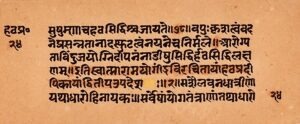
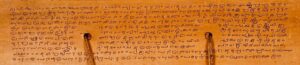
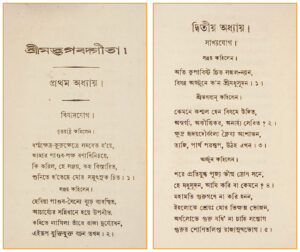
Lal Ded expressed her experience in vakhs, short verses in Kashmiri, the language of ordinary people. About 285 are attributed to her. They are among the earliest works written in that language, which is why she is also seen as one of the mothers of Kashmiri literature.
Her verses speak of the breath, of silence, of seeking God within rather than in temples. They criticise empty ritual and defend a direct, lived spirituality. Today they can be read in translations such as Coleman Barks’ Naked Song.
A bridge between traditions
Lal Ded influenced Nund Rishi, Kashmir’s great Sufi saint and founder of the Rishi order. That is why she is remembered by many names: Lalleshwari to Hindus, Lalla Arifa to Muslims. In a land marked by conflict, she is a figure who unites.
On the mat
Lal Ded spoke often of the breath as a path inward. Try it: sit comfortably and, for five minutes, make each exhale a little longer than the inhale. No effort. Notice how the mind settles, breath by breath.
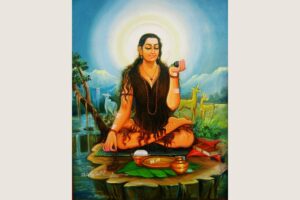
Image: illustration of Lal Ded.
Source: Wikipedia · The New Indian Express.