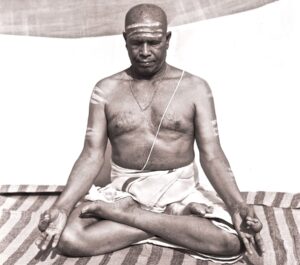
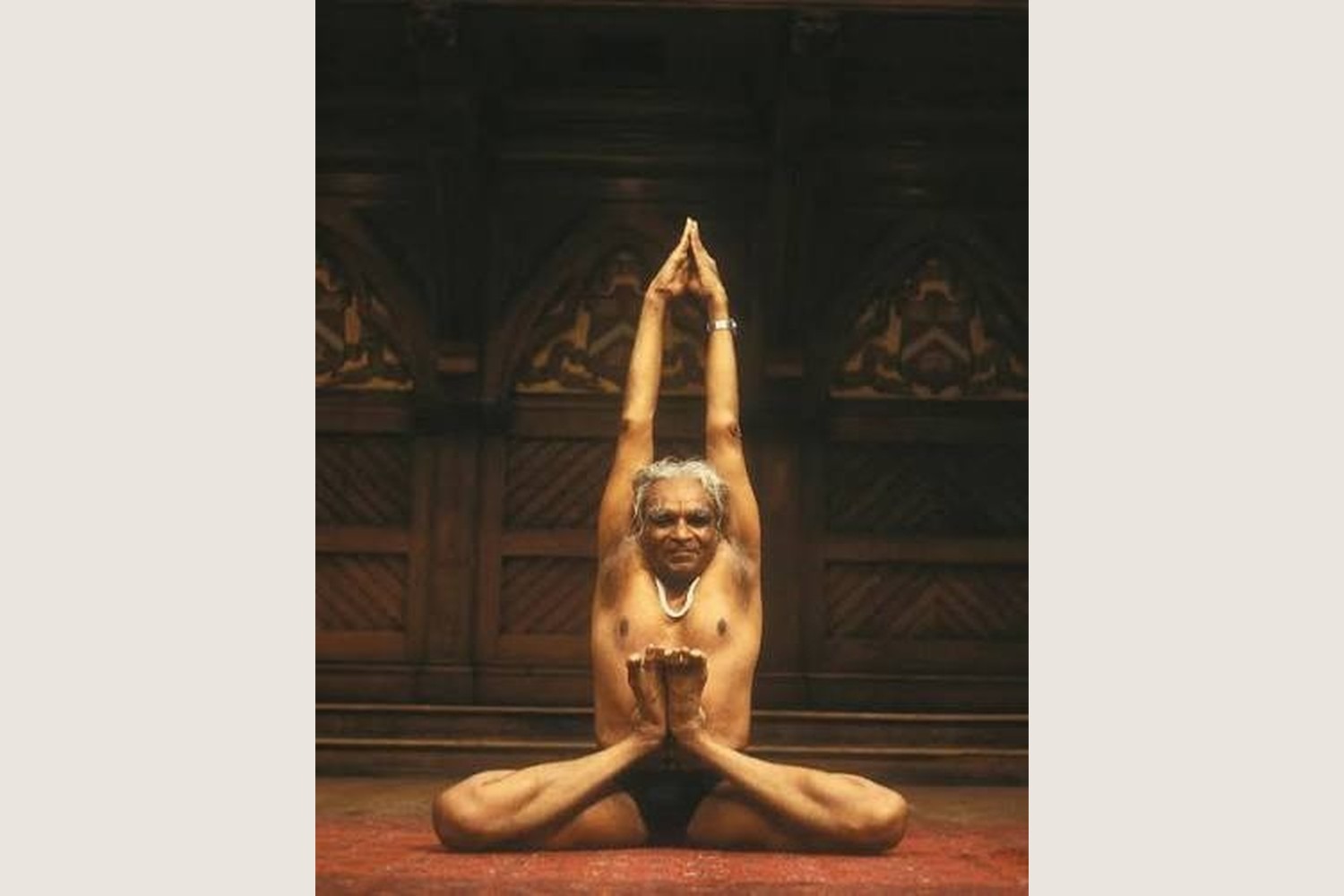
B.K.S. Iyengar (1918-2014) was one of the most influential yoga teachers of the 20th century. His method, built on precision, alignment and the use of props, has reached millions of people. Today almost every yoga class uses blocks, straps or blankets, and that is largely thanks to him.
A fragile childhood
Bellur Krishnamachar Sundararaja Iyengar was born on 14 December 1918 in Bellur, a village in today’s Karnataka, during the flu pandemic. As a child he suffered from malaria, tuberculosis and malnutrition, and his father died when he was nine. He was a weak and sickly boy.
In 1934, aged 15, he went to live in Mysore with his brother-in-law, Tirumalai Krishnamacharya. There he began to practise yoga. His teacher was very demanding and the relationship was not always easy, but the practice slowly gave him back his health.
Pune
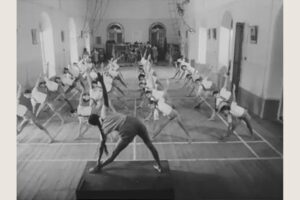
In 1937 Krishnamacharya sent him to Pune to teach. He was young, spoke little English and had almost no resources. He practised for hours every day, often alone, and built his own method by observing the body with great attention. In 1943 he married Ramamani, who stood by him all his life.
Menuhin and the leap to the West
In 1952 he met the violinist Yehudi Menuhin, who became his student and invited him to Europe. Thanks to this friendship, Iyengar began teaching in London, Switzerland, Paris and the United States, and his yoga spread around the world.
Light on Yoga
In 1966 he published Light on Yoga, with more than 200 postures described and photographed in detail. It became a classic, translated into dozens of languages, and is still a reference book for teachers and students. He later wrote Light on Pranayama and Light on the Yoga Sutras of Patanjali.
Props
After a scooter accident, Iyengar had to rebuild his practice. From that, and from working with students with injuries and limitations, came the props: blocks, straps, blankets, chairs and wall ropes. The idea is simple: adapt the pose to the person, not the person to the pose. This makes yoga accessible to older people, people with injuries and beginners.
Legacy
In 1975 he opened the Ramamani Iyengar Memorial Yoga Institute in Pune, named after his wife, who had died shortly before. Time magazine named him one of the 100 most influential people in the world in 2004, and in 2014 he received the Padma Vibhushan, one of India’s highest honours. He died on 20 August 2014, aged 95. His children Geeta and Prashant carried on his work.
His style was very demanding, sometimes harsh, but what he left us is huge: an attentive, precise yoga that is open to everyone.
On the mat
Try Tadasana, mountain pose, the way Iyengar would: feet together, weight spread between heels and toes, thighs active, neck long. Breathe and observe each part of the body for one minute. If it’s hard, place a block between your thighs. Even standing still, there is a lot to learn.
Photo: B.K.S. Iyengar.
Source: Wikipedia.