Among the many festivals of India, Chhath Puja shines with a special light. It is celebrated with deep devotion in the northern states, especially Bihar and eastern Uttar Pradesh, and is dedicated to the Sun. Over four days, prayer, ritual, fasting and bathing in sacred waters come together in one of the most austere and moving festivals of the Indian calendar.
A celebration of life
At Chhath, the Sun is revered as a symbol of life, energy and light, the force that sustains all life on Earth. Devotees ask it for long life, prosperity and wellbeing for their families, and many also honour Chhathi Maiya, the mother goddess associated with the festival.
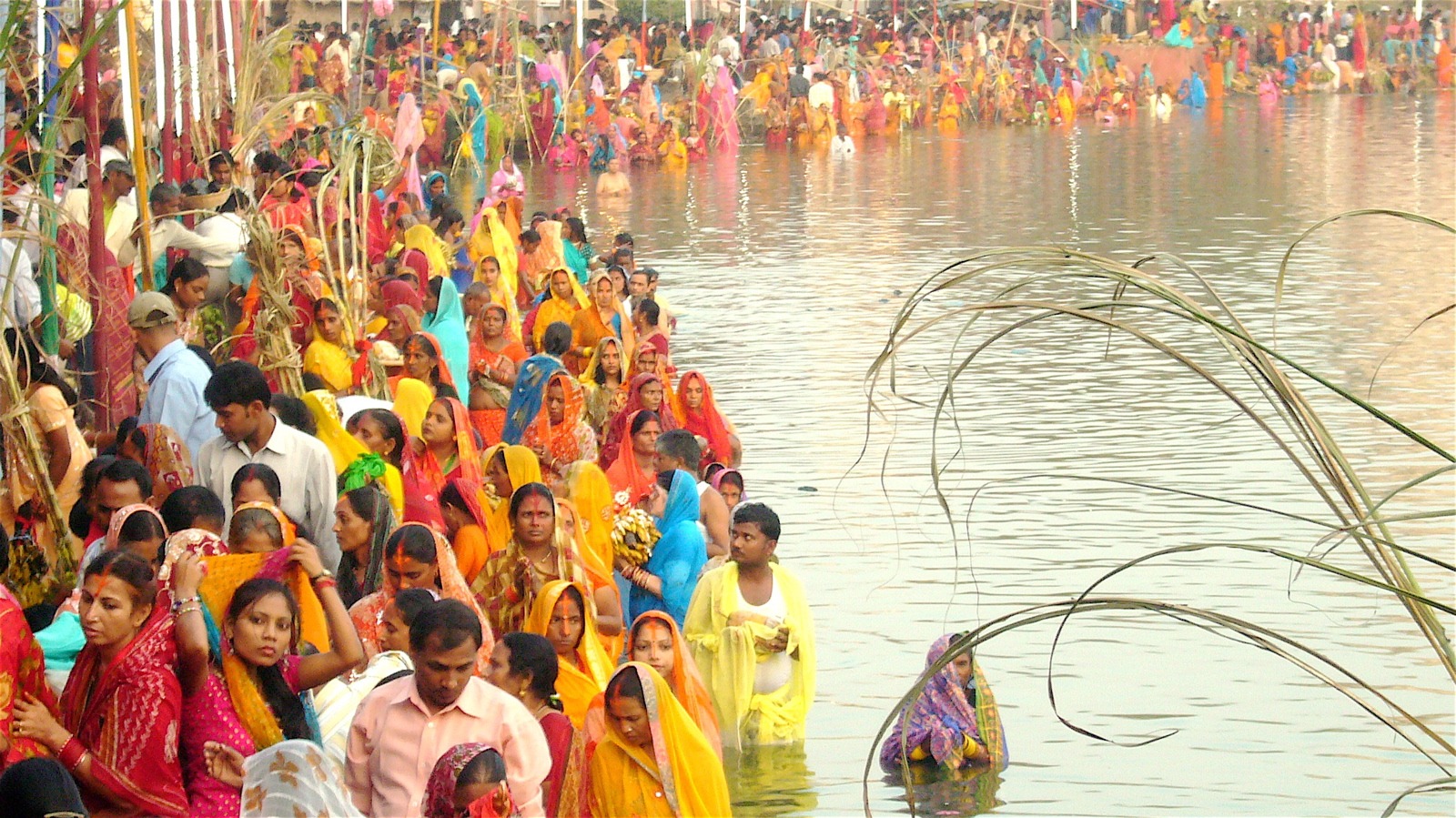
It is held twice a year: in the month of Chaitra (March–April) and, the main one, in Kartika (October–November). This double date reflects the bond between nature and human life. Devotees immerse themselves in the Ganges, or in other rivers and ponds, and offer their prayers to the Sun.
Vedic roots
Chhath is rooted in ancient Hindu Vedic traditions and in reverence for the Sun as the source of all life. It has one feature that makes it unique: it is the only occasion on which both the setting and the rising sun are worshipped.
A four-day inner pilgrimage
- Day 1, Nahay Khay: devotees bathe in a river or pond and carry Ganges water home to prepare offerings. Homes are thoroughly cleaned as a sign of purification.
- Day 2, Kharna (or Lohanda): a day-long fast, broken in the evening after worshipping Mother Earth, with kheer (rice pudding) and fruit. The prasad is shared with family and friends. From here many devotees begin a very strict fast, often without water.
- Day 3, Sandhya Arghya: at dusk, devotees gather on the riverbanks to make the arghya, the offering to the setting sun. Often they stand waist-deep in the water, holding bamboo baskets of fruit, sugarcane and sweets. Folk songs and cultural performances create a magical atmosphere. That night is the Kosi: small canopies of sugarcane stalks are decorated with lit lamps and prasad.
- Day 4, Usha Arghya: before dawn, everyone returns to the river to offer arghya to the rising sun. Then the fast is broken and prasad is shared with neighbours and family. It is the joyful culmination of devotion and celebration.
Experiencing it as a visitor
Chhath is a unique chance to see Indian spirituality and culture up close. To experience it, head to the riverbanks of Bihar or eastern Uttar Pradesh, where devotees gather in their thousands. You can join the rituals respectfully, listen to the folk songs that tell the history and culture of Bihar, and wander the markets, where you will find traditional sweets such as thekua, biscuits made of wheat flour, jaggery and ghee. Don’t miss the Kosi night, with its sugarcane canopies and clay lamps lighting up the dark. And when the rising sun turns the riverbanks gold, joining the offering is to share the festival’s joyful finale.
Practical information
- Where: Bihar and Uttar Pradesh, especially on the banks of the Ganges (Patna, Varanasi) and at ponds and rivers in towns and villages.
- When: in 2026, from 13 to 16 November. The spring edition falls in the month of Chaitra.
- Entry: free.
- Respect: devotees keep a very hard fast, so don’t offer them food or drink during the ritual, and always ask before taking photos.
A spirit of devotion
Chhath is a profound expression of devotion, spirituality and cultural heritage. Its rituals, steeped in history and mythology, bring people closer to nature and the divine. Those who experience it, even as visitors, come away captivated by its spirit of unity.
A practice on the mat
Chhath honours both the setting and the rising sun. Try two very slow sun salutations: one in the morning facing east, and one at dusk facing west. Move with one full breath per movement, and finish with your hands at your heart for a few seconds in silence.
Source: Incredible India – Chhath Puja.
Image: Steffen Gauger, Wikimedia Commons, CC BY-SA 3.0.