On the Terai plains of southern Nepal, a few kilometres from the Indian border, lies one of the most sacred places on Earth: Lumbini, where Siddhartha Gautama, the Buddha, was born. According to the tradition UNESCO records, he was born in 623 BC in the famous gardens of Lumbini, which soon became a place of pilgrimage. It has been a World Heritage Site since 1997 and is now a major Buddhist pilgrimage centre, with the archaeological remains of the Buddha’s birth at its heart.
The story of the birth
Queen Maya Devi, wife of King Suddhodana of the Shakyas, was travelling to her parents’ home to give birth. Passing through the gardens of Lumbini, she stopped to rest. Tradition says she reached up to hold the branch of a tree and, standing, gave birth to Prince Siddhartha. Beforehand she had bathed in the sacred pond. That same pond, the Shakya tank (Puskarini), still exists and is part of the site.
The Ashoka pillar: written proof
Among the earliest pilgrims was the Mauryan emperor Ashoka, who had embraced Buddhism. In 249 BC he raised one of his commemorative sandstone pillars here, with an inscription in the Pali language and Brahmi script. It records the emperor’s visit and states that the Buddha was born here. It is thanks to this inscription that Lumbini can be identified with certainty as the birthplace.
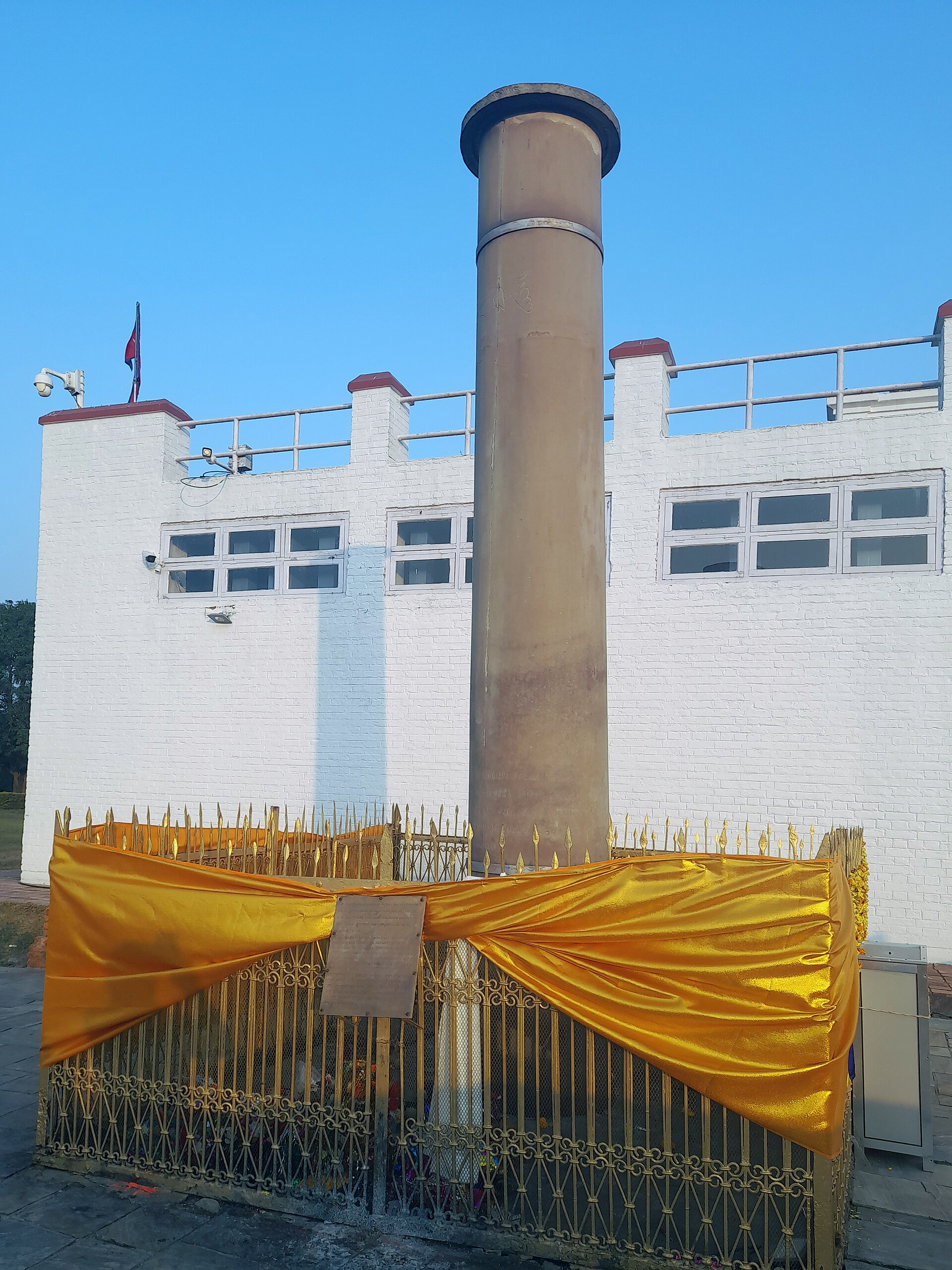
For centuries the site lay forgotten under vegetation, until the pillar was rediscovered in 1896. Since then, a series of excavations has confirmed the authenticity of the remains.
What you find at the site
The protected archaeological area includes elements from many periods:
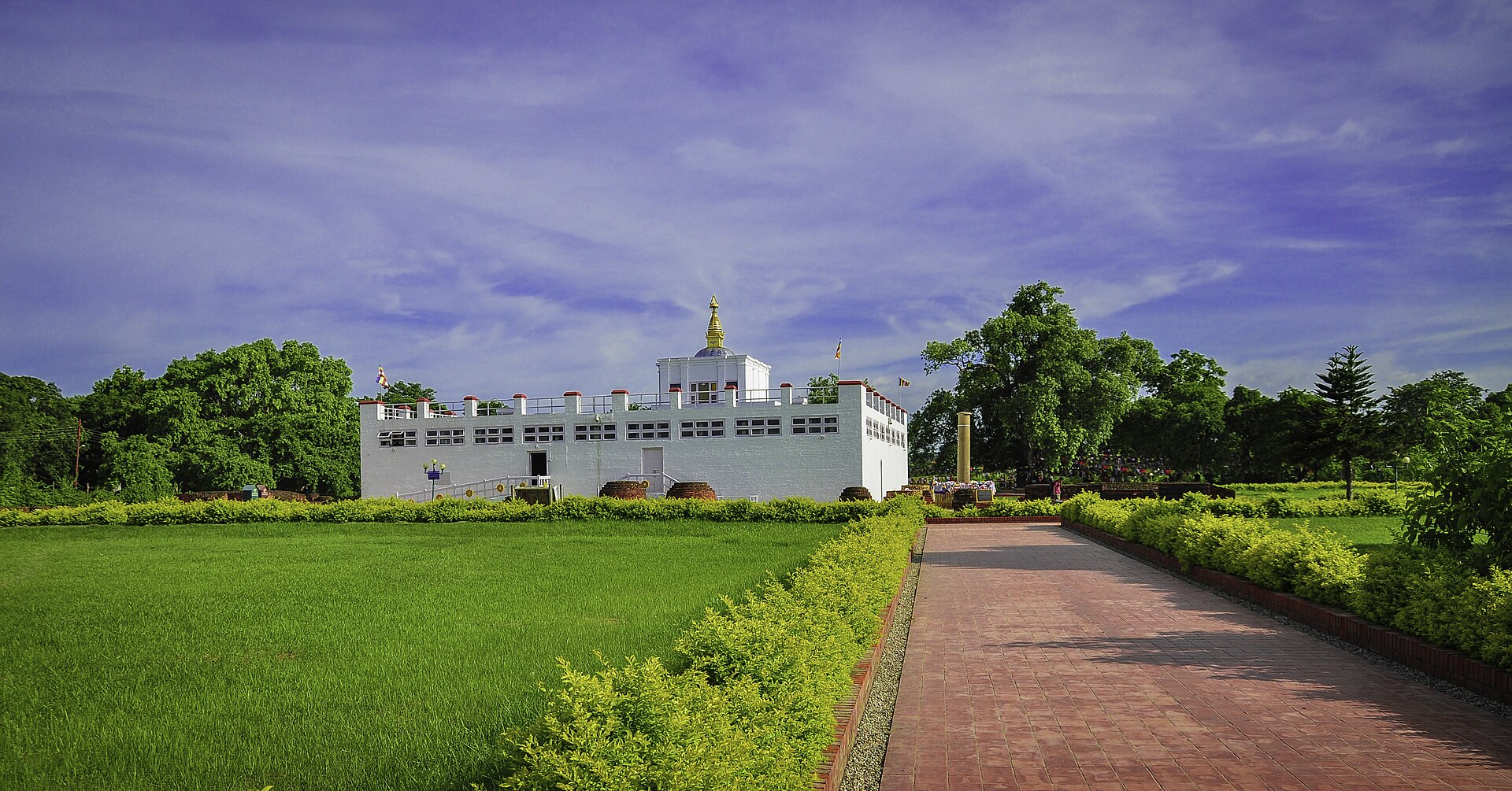
- The Maya Devi temple, which shelters layer upon layer of brick structures in a cross-wall system, from the 3rd century BC to the 20th century. Inside, the exact spot of the birth is venerated.
- The Ashoka pillar, in sandstone, with its Brahmi inscription.
- The Shakya tank, the sacred pond.
- Remains of viharas, Buddhist monasteries from the 3rd century BC to the 5th century AD.
- Remains of stupas, memorial shrines from the 3rd century BC to the 15th century AD.
These remains are highly valuable because they show what Buddhist pilgrimage centres were like from a very early period.
Why it is World Heritage
UNESCO inscribed it for two reasons. First, as the birthplace of the Buddha, confirmed by the pillar inscription, it is one of the holiest places of one of the world’s great religions. Second, its monasteries and stupas, spanning almost two thousand years, are exceptional evidence of how the earliest pilgrimage centres worked.
Conserving without closing the doors
The whole site, including its buffer zone, is owned by the Government of Nepal and managed by the Lumbini Development Trust, an autonomous non-profit organisation. It is protected under the Ancient Monument Preservation Act of 1956.
The site sits at the centre of a master plan begun with the United Nations and designed by the Japanese architect Kenzo Tange between 1972 and 1978. Around the sacred garden lies a large monastic zone where Buddhist countries have built their own temples and monasteries.
The challenges are real. The brick remains are fragile and suffer from humidity, visitor numbers and industrial development in the region. A delicate balance is needed between conserving the archaeological remains and welcoming pilgrims and travellers from all over the world. A long-term management plan is being prepared, and parts of the site, some outside the protected boundary, are still to be excavated.
Visiting Lumbini
- Getting there: the nearest airport is Bhairahawa (Siddharthanagar), about 20 km away. From India, the usual border crossing is Sunauli.
- When to go: October to March has the most pleasant weather. Buddha Jayanti (Vesak), the Buddha’s birthday, falls in April or May and draws many pilgrims.
- Respect: remove your shoes and keep silent inside the Maya Devi temple. Dress modestly.
- Nearby: the monastic zone, the Eternal Peace Flame and, a little further, Tilaurakot, identified with ancient Kapilavastu, where the prince grew up.
A practice
Lumbini reminds us that the Buddha’s path starts with a human birth, in a garden, under a tree. Try a seated metta meditation, outdoors if you can: silently wish that all beings be well, happy and free from suffering. Start with yourself, move on to someone you love and end with all beings.
Source: UNESCO – Lumbini, the Birthplace of the Lord Buddha.
Image: Bibek Raj Pandeya, Wikimedia Commons, CC BY-SA 4.0.