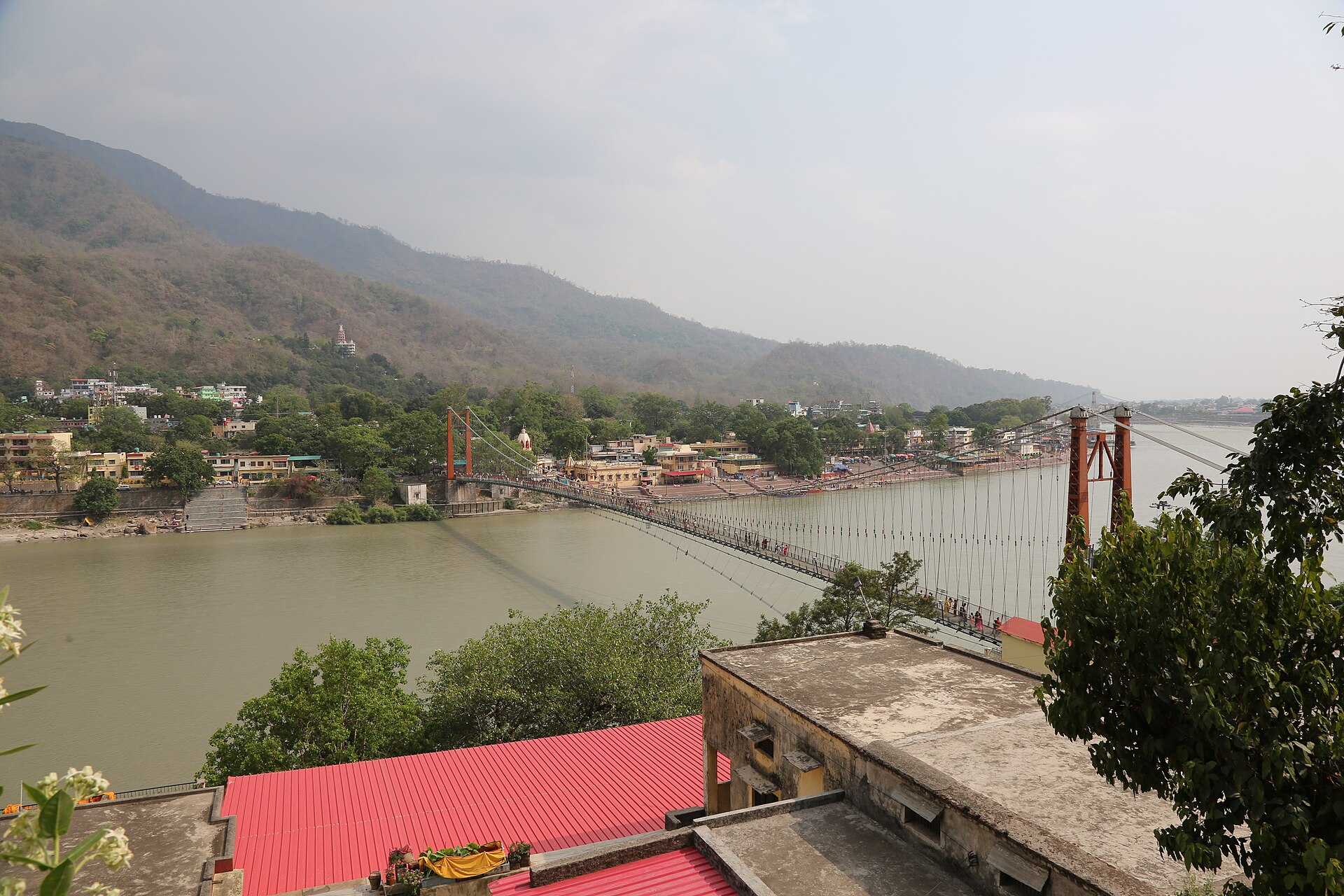
At the foot of the Himalayas, in the state of Uttarakhand, the Ganges comes down from the mountains clear and fast and flows through Rishikesh, known worldwide as the yoga capital of the world. Its riverside ghats, suspension bridges and ashrams define its character. For many practitioners it is a place of pilgrimage, and for many travellers, the gateway to India’s spirituality.
A name of sages
The name comes from Sanskrit and refers to the rishis, the sages, and their hair: a reminder of the many sages and saints who, over the centuries, withdrew here in search of enlightenment. Local tradition holds that Rama did penance at Triveni Ghat after defeating Ravana.
The yoga capital
Rishikesh is a global centre for yoga, meditation and holistic healing. In the 1960s the Beatles came here to study meditation with Maharishi Mahesh Yogi, which made the town famous around the world. The old ashram where they stayed, now known as the Beatles Ashram, is open to visitors.
But the story goes back further. Swami Sivananda, one of the teachers who most shaped the yoga we practise today, founded his ashram here, and many of the disciples who took yoga to the West set out from Rishikesh. Today there are ashrams and schools for every level, from one-hour classes to teacher trainings, and every March the town hosts an International Yoga Festival.
What to see
- Ram Jhula: a suspension bridge over the Ganges with lovely views of the river.
- Beatles Ashram: the old meditation centre linked to the Beatles’ visit, now covered in murals.
- Raghunath Temple: an ancient temple known for its calm atmosphere.
- Bharat Mandir: believed to hold a stone manifestation of Vishnu.
- Gita Bhawan: a complex with frescoes of scenes from the Bhagavad Gita.
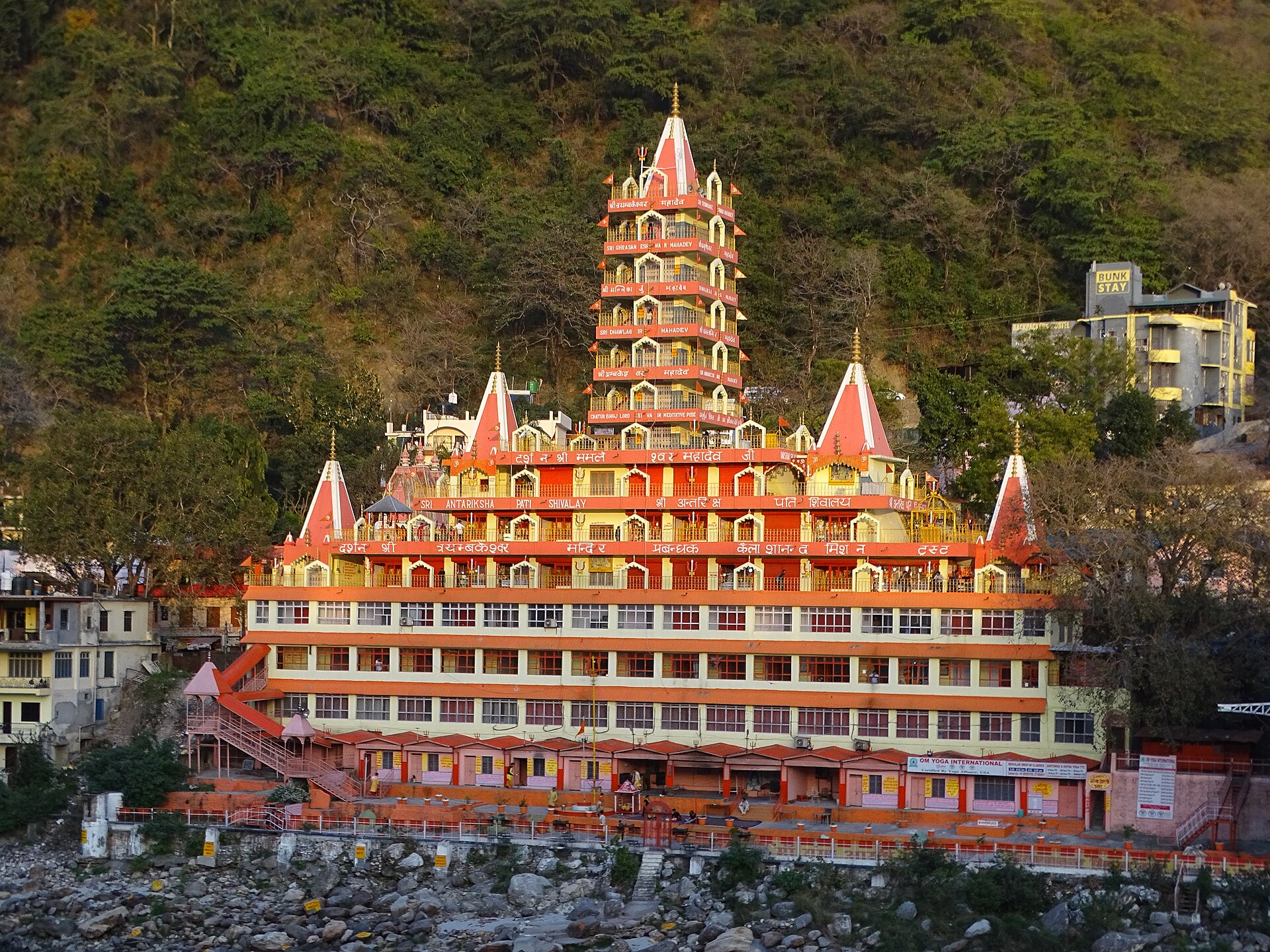
- Trayambakeshwar Temple: a thirteen-storey temple dedicated to Shiva.
- Triveni Ghat: the ghat tied to the Rama legend.
Ganga Aarti and markets
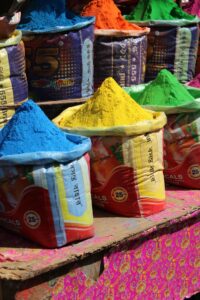
Every evening at the ghats the Ganga Aarti takes place: chanting, lamps and incense offered to the river. It is one of the most beautiful moments of the day. Around the ghats, markets sell religious items, carved figures, incense and traditional clothing such as kurtas.
Nature and adventure
The Ganges is also a place to get moving: there is white-water rafting, and trails lead through varied landscapes to hidden waterfalls. Bungee jumping, paragliding and parasailing are also on offer.
Good to know
- Vegetarian and alcohol-free: meat and alcohol are not served in Rishikesh.
- Gateway to the Char Dham: it is the starting point for pilgrims heading to the four Himalayan shrines of Yamunotri, Gangotri, Kedarnath and Badrinath.
- When to go: September to November and February to April. Winter nights are cold (lows of about 5 °C in January), and May and June can reach 45 °C.
- Getting there: the nearest airport is Jolly Grant (Dehradun); you can also come from Delhi. Rishikesh has a railway station.
- Nearby: Haridwar, Dehradun and Mussoorie.
If you go to practise
Choose your school carefully: look at who teaches, which tradition they follow and how many real hours of practice there are. Leave free time: sitting in silence by the Ganges is often the best class.
A practice
Start the day the Rishikesh way: before asana, do a few minutes of nadi shodhana, alternate nostril breathing. Close the right nostril with your thumb and breathe in through the left; close the left with your ring finger and breathe out through the right. Breathe in through the right, switch, breathe out through the left. Ten slow rounds, like water flowing down.
Source: Incredible India – Rishikesh.
Image: VK1983, Wikimedia Commons, CC BY-SA 4.0.